Telepresence and Private Yoga Instruction: How Singapore’s Instructors Are Integrating Real-Time Biometric Feedback Into Remote Sessions
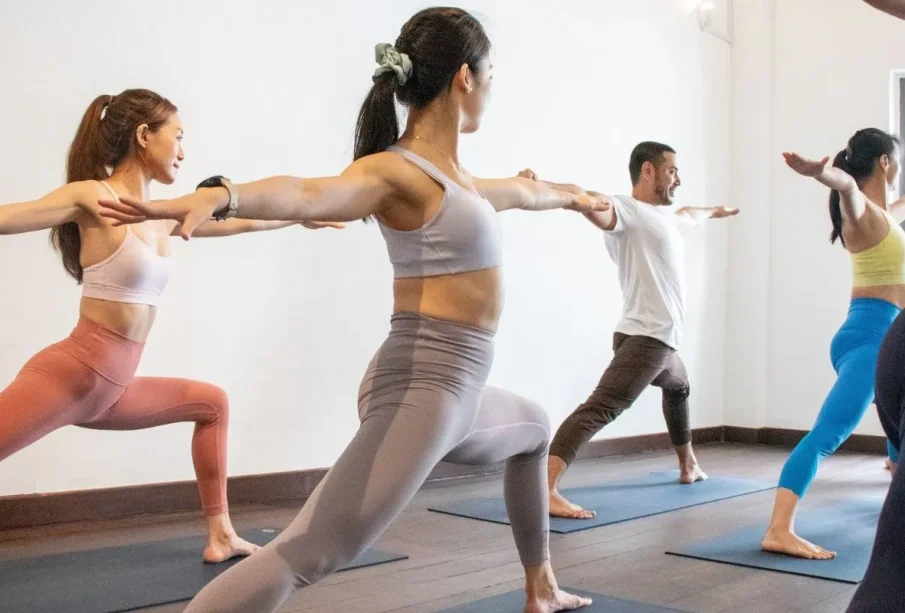
The pandemic period forced a rapid and largely involuntary experiment in remote private yoga instruction across Singapore’s teaching community. What began as a practical response to studio closures produced, for a subset of instructors and clients, genuine insights into what remote delivery can and cannot accomplish in a private yoga context, and how technology can partially bridge the observational and relational gaps that physical distance creates. The instructors who engaged most thoughtfully with this experiment have continued developing their remote delivery capabilities beyond the pandemic period, using technology that was not available or widely adopted before 2020 to offer private yoga classes singapore clients a remote experience that is meaningfully more sophisticated than the simple video call format that most pandemic-era remote yoga settled into.
The integration of real-time biometric feedback into remote private yoga instruction is the most significant recent development in this evolution, creating a category of technology-augmented remote instruction that closes some of the most important gaps between in-person and remote private yoga delivery.
The Core Limitations of Basic Remote Yoga Instruction
Before examining how biometric integration improves remote instruction, understanding the specific limitations it addresses clarifies why the integration matters.
Observational limitations are the most fundamental. In-person private yoga instruction allows the teacher to observe the client’s movement from any angle, to walk around the client to assess alignment from multiple viewpoints, and to use the spatial proximity that enables tactile cueing and hands-on adjustment. Video instruction compresses this three-dimensional observational capacity into the single viewing angle that the camera provides, which is often a sub-optimal angle for the most important alignment observations, and eliminates the tactile dimension entirely.
The absence of physiological data in basic remote sessions means the instructor has limited access to the client’s internal state beyond their verbal reports and visible physical presentation. Whether the client is working at an appropriate intensity, how their nervous system is responding to the session, whether their breathing is achieving the quality that the practice requires, all of these dimensions that an experienced in-person instructor reads continuously from multiple signals are largely invisible in a basic video session.
The relational warmth and co-regulatory quality of shared physical space, which supports the psychological safety that makes private yoga instruction most therapeutically effective, is diminished in remote formats regardless of the quality of the video connection. The social neuroscience of in-person presence, discussed in earlier articles, cannot be fully replicated through a screen.
How Biometric Data Integration Addresses These Limitations
The integration of real-time biometric data from wearable devices worn by the client during remote sessions addresses the physiological data limitation in ways that meaningfully improve the instructor’s ability to deliver appropriate and responsive instruction at a distance.
Heart rate monitoring during remote sessions provides the instructor with objective data on the client’s effort level and cardiovascular response to specific practices that eliminates one of the most significant information gaps in remote instruction. An instructor who can see that a client’s heart rate has reached 145 beats per minute in what was intended to be a moderate-intensity standing sequence has information that allows immediate instruction adjustment, regardless of the physical distance between them. Without this data, the instructor depends on the client’s self-report, which is subject to both inaccuracy and the social dynamics of private client relationships that can make clients reluctant to report that they are finding a practice more demanding than expected.
Heart rate variability data, when available from the client’s wearable in real time, provides information about autonomic nervous system state that is directly relevant to the core therapeutic goals of most private yoga instruction. An instructor who can see that a client’s HRV is suppressed at the start of a session has immediate context for the appropriate session design: a more restorative, parasympathetic-activating approach rather than the dynamic sequence that might have been planned for a client presenting with a healthy HRV baseline.
Breathing pattern monitoring through wearable respiratory sensors or through the increasingly sophisticated respiratory estimation capabilities of mainstream smartwatches provides data on whether the client is achieving the diaphragmatic breathing quality that the practice requires. This is particularly valuable in therapeutic yoga contexts where the breath is a primary intervention target and where the client’s ability to achieve the intended breathing pattern is the primary determinant of whether the session’s therapeutic goals are being met.
Video Technology Optimisation for Movement Observation
Beyond biometric integration, the instructors delivering the most effective remote private yoga sessions in Singapore have invested in video technology that addresses the observational limitations of standard video call setups.
Multiple camera angles, achieved through simple multi-device setups where the client’s phone provides one angle and a tablet or laptop another, allow the instructor to switch between views that optimise their observation for different exercises. A lateral view that is optimal for spinal alignment assessment, combined with a frontal view for bilateral symmetry observation, together provide substantially better observational coverage than any single camera position.
High-resolution video at adequate frame rates for movement observation, rather than the compressed video quality that standard video call platforms use by default to manage bandwidth, preserves the movement detail that alignment assessment requires. Several instructors have moved to video platforms that support higher quality transmission for precisely this reason.
Delayed video review, where the instructor reviews recorded session footage at points identified during the session as needing closer examination, supplements real-time observation with the advantage of being able to review movement sequences repeatedly from a fixed viewpoint without the time pressure of live instruction.
Studios like Yoga Edition that support their private instructors in developing sophisticated remote delivery capabilities are extending their community service beyond the physical boundaries of their studios, reaching clients whose circumstances require remote instruction while maintaining the quality standards that in-person private instruction has established.