
Mastering the Indian Market: What Every Serious Investor Must Know About Equities and Derivatives
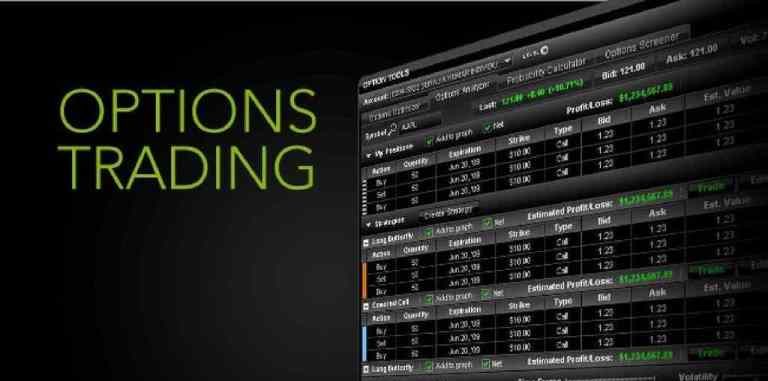
Across India, a new generation of financially aware individuals is stepping into markets with greater curiosity and ambition than any previous generation — yet many of them arrive with a fragmented understanding of how the share market actually functions at its deepest levels, and even fewer have genuinely grasped what option trading demands before they commit their hard-earned savings to strategies they only partially understand, in an environment that consistently rewards preparation and punishes assumption.
The Market Is Bigger Than Most People Imagine
When most Indians think about investing in the stock market, they picture buying shares — selecting a company, placing an order, watching the price move. This picture is accurate but radically incomplete. The Indian financial market is a multi-layered ecosystem with distinct segments, each operating according to its own rules, attracting its own category of participants, and offering its own unique combination of risk and reward.
The cash equity segment — where shares of listed companies change hands between buyers and sellers at current market prices — is the layer most people are familiar with. It is the foundation upon which everything else is built. But sitting above this foundation is a derivatives market of extraordinary scale and sophistication, where contracts based on the value of underlying securities and indices trade in volumes that regularly dwarf those of the underlying cash market itself.
Understanding the relationship between these two layers — how they influence each other, how information flows between them, and how skilled participants use both in combination — is what separates genuinely market-literate investors from those who only see part of the picture.
Equity Investing as the Art of Owning Businesses
The most enduring principle in fairness investing is one which gets obscured by way of the noise of every day price movements, quarterly result reactions, and social media commentary — that buying a percentage manner turning into a partial proprietor of a actual business, and that the lengthy-time period performance of that percentage will in the end reflect the long-time period performance of the business in the back of it.
India’s indexed fairness universe spans loads of organisations throughout dozens of sectors, from personal region banks and generation companies to pharmaceutical producers, consumer goods companies, infrastructure developers, and speciality chemicals producers. Each of these agencies operates within its own aggressive environment, managed with the aid of human beings making strategic decisions whose effects will determine whether the company grows in cost or shrinks.
The investor who strategises this universe as a commercial enterprise analyst — studying profits trajectories, competitive moats, capital allocation great, and control tune records — and who buys possession in wonderful companies at realistic prices, offers themselves a real possibility of compounding wealth through the years. The investor who approaches the market as a charge speculator, shopping for something, has moved maximum these days and selling at the first signal of soreness, gives the market a scientific advantage over their capital.
This distinction isn’t always philosophical. It is practical and consequential, and it determines consequences over lengthy periods of participation.
What Makes Derivatives Fundamentally Different
The derivatives segment of the Indian market operates on a completely different set of principles from cash equity investing. Where equity investing rewards patience and the passage of time, derivatives introduce expiry — every contract has a finite lifespan after which it ceases to exist, regardless of what the underlying price does subsequently. Where equity investing allows unlimited holding periods, derivatives impose a discipline of timing that has no equivalent in the cash market.
Futures contracts commit both parties to a transaction at a predetermined price on a specified future date. Options contracts give the buyer a right without imposing an obligation — a crucial asymmetry that is the source of both the unique power and the unique complexity of options as an instrument.
This asymmetry means that options buyers and options sellers are engaged in fundamentally different businesses. The buyer pays a premium to acquire a right. The seller collects that premium and accepts an obligation. Their risk profiles, their profit conditions, and their relationship with time are mirror images of each other — and understanding both sides of this relationship clearly is a prerequisite for intelligent options participation.
The Mechanics of Options That Every Participant Must Internalise
An options agreement in the Indian marketplace is described by means of numerous parameters that together decide its price and behaviour. The underlying asset — which can be an individual fairness or a market index, along with Nifty 50 or Bank Nifty — establishes what the settlement tracks. The strike fee is the extent to which the client has the right to transact. The expiry date is while the settlement ceases to exist. The premium is the charge paid by the customer to the vendor for the rights the settlement confers.
Call alternatives give shoppers the proper to purchase the underlying at the strike price. They benefit from the cost as the underlying rises above the strike and lose cost as it falls below. Put options provide consumers the right to put in at the strike price. They advantage price as the underlying falls beneath the strike and lose a price because it rises above. These two contraptions are the building blocks from which each alternative method inside the Indian market is built.
The critical insight that most retail participants pass over entirely is that the top class of an option is not decided solely by whether or not the underlying price is above or below the strike. It is shaped concurrently by using the gap between the contemporary charge and the strike, the time until expiry, and the implied volatility embedded within the agreement, and those three forces interact in ways that could work powerfully for or against the consumer depending on how the placement is sized and controlled.
Time Decay: The Silent Opponent of Every Options Buyer
If there is a single concept that, once truly understood, transforms how a retail investor approaches options, it is time decay — the systematic erosion of an option’s value as its expiry date approaches, independent of what the underlying price does.
Every option has two components of value. Intrinsic value is the amount by which the option is currently in the money — the extent to which exercising it right now would generate a profit. Time value is everything else — the additional premium the market assigns to reflect the possibility that the option may become more valuable before expiry.
As each trading day passes, time value evaporates. An option that has thirty days to expiry today will be worth less tomorrow, all else being equal, simply because one day of potential has been consumed. This decay accelerates as expiry approaches, with the most severe time value erosion occurring in the final week of the contract’s life.
For option buyers, this means the underlying must move in the right direction, with sufficient magnitude, and within a tight timeframe — three conditions that must all be satisfied simultaneously for the trade to be profitable. For option sellers, time decay is a source of systematic income as long as the underlying stays within a range that keeps the sold option out of the money at expiry. This is why experienced practitioners of options in the Indian market frequently lean toward selling rather than buying, accepting defined risk in exchange for the consistent benefit of time working in their favour.
The Role of Implied Volatility in Options Pricing
Implied volatility is among the most consequential and least understood variables in options pricing. It represents the market’s collective expectation of how much the underlying asset will flow over the ultimate lifestyles of the option, expressed as an annualised percentage. When uncertainty is excessive — in advance of important occasions which include the Union Budget, Sebi policy announcements, essential index rebalancing, or huge corporate effects — implied volatility rises, inflating choice rates across all strikes and expiries.
Buying alternatives when implied volatility is at elevated tiers is one of the most common and high-priced errors in retail derivatives participation. The consumer pays an inflated premium reflecting excessive uncertainty, and if the anticipated move materialises, however is smaller than what is priced in, the choice can also really lose value, no matter the underlying moving within the proper course. This phenomenon — called being lengthy options right into a volatility crush — is responsible for a sizeable proportion of the losses skilled via retail options customers in Indian markets.
Developing awareness of implied volatility levels relative to historical norms, and using that awareness to tell whether shopping for or selling options is more suitable in a given surroundings, is one of the most valuable competencies an options dealer in India can increase.
Building Competence Before Committing Capital
India’s derivatives market offers extraordinary opportunities to those who enter it with genuine competence and disciplined risk management. It offers equally extraordinary opportunities to lose capital for those who enter it unprepared, driven by the allure of leverage and the example of the rare participant whose early success they have heard about without hearing about the subsequent losses.
The path that consistently produces sustainable participation begins with mastery of the equity market — understanding businesses, reading financial statements, developing market intuition through direct observation over multiple market cycles. From that foundation, a structured and gradual education in derivatives mechanics, followed by paper trading to test understanding without financial consequence, followed by carefully sized real positions in the simplest strategies, creates the progression through which genuine options competence is built.
There are no shortcuts in Indian markets that actually work over time. But there is a reliable process — and the investors who follow it arrive at a level of market participation that combines the wealth-building potential of equity ownership with the strategic flexibility of derivatives in a way that is genuinely, durably powerful.